3 July 2026
The AI Frontier: Global Partnerships, Physical AI, and Enterprise Scaling
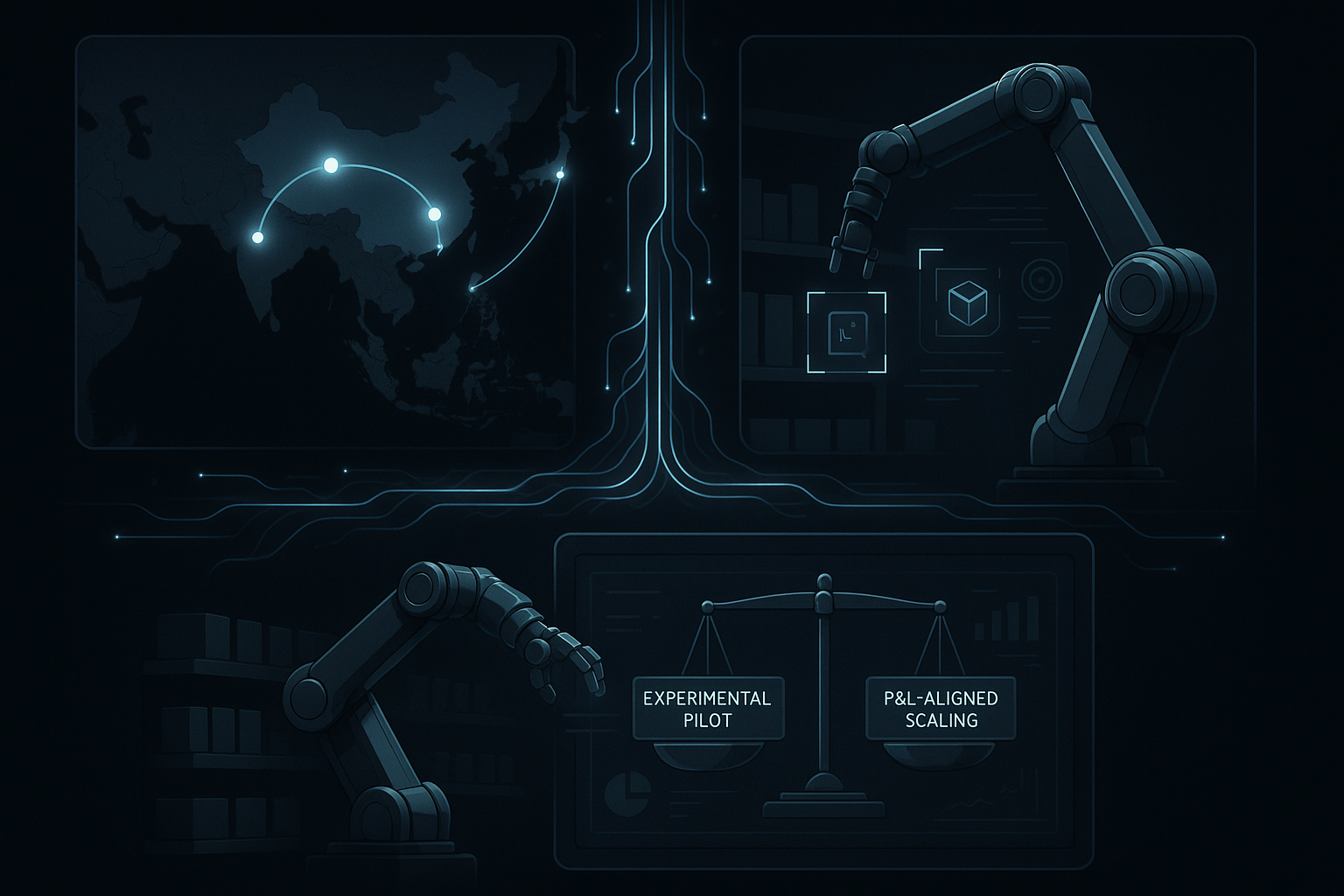
The AI landscape is undergoing a massive transformation today, shifting from pure software development to deep geopolitical cooperation and the integration of "Physical AI" into the real world. Here is your breakdown of the top developments for July 3, 2026.
- India and Japan Sign Landmark AI Strategic Partnership In a major geopolitical milestone, Indian Prime Minister Narendra Modi and Japanese Prime Minister Sanae Takaichi have signed a sweeping series of agreements to deepen cooperation in AI, semiconductors, and critical minerals. The partnership aims to combine Japan's precision hardware technology with India's vast software capabilities to create a more resilient and inclusive AI ecosystem in the Indo-Pacific.
Why it matters: As global powers navigate economic security challenges, this alliance aims to build "trustworthy" AI supply chains and reduce dependencies, positioning both nations as leaders in the Global South’s AI development.
- Striding AI Unveils Next-Gen Robotic Foundation Systems Striding AI has officially announced the development of a new generation of robotic foundation systems dedicated to "Physical AI". Their approach integrates foundation models with robotic control systems, hardware, and deployment infrastructure to enable machines to perceive, reason, and act in commercial and industrial environments.
Why it matters: We are moving beyond screen-based AI. By building "World Action Models" that allow robots to interact autonomously with the physical world, Striding AI is addressing the critical gap in bringing intelligent, scalable robotics into everyday settings like retail and logistics.
- The "Governance Gap" in Enterprise AI Scaling Following a wave of major model releases earlier this week, the consensus among industry analysts is that 2026 is the year of "scaling." Companies are shifting from experimental pilots to integrated workflows, but success is no longer defined by the technology alone. Governance, clean data, and tying every AI investment directly to P&L (Profit and Loss) lines have become the primary focus for enterprises trying to move beyond the "pilot" phase.
Why it matters: Organizations are finding that deploying AI agents—which can autonomously plan and use digital tools—requires a new level of "decision governance" that many firms currently lack.
Resources for Further Learning: PM India: Joint Statement on India-Japan AI Cooperation Asia News Network: Striding AI’s Physical AI Robotic Systems[Build Fast with AI: Industry Trends & Model Leaderboard]
Author: MS Khan