19 June 2026
The AI Frontier: Marketing Integration, Corporate Efficiency, and Strategic Vision
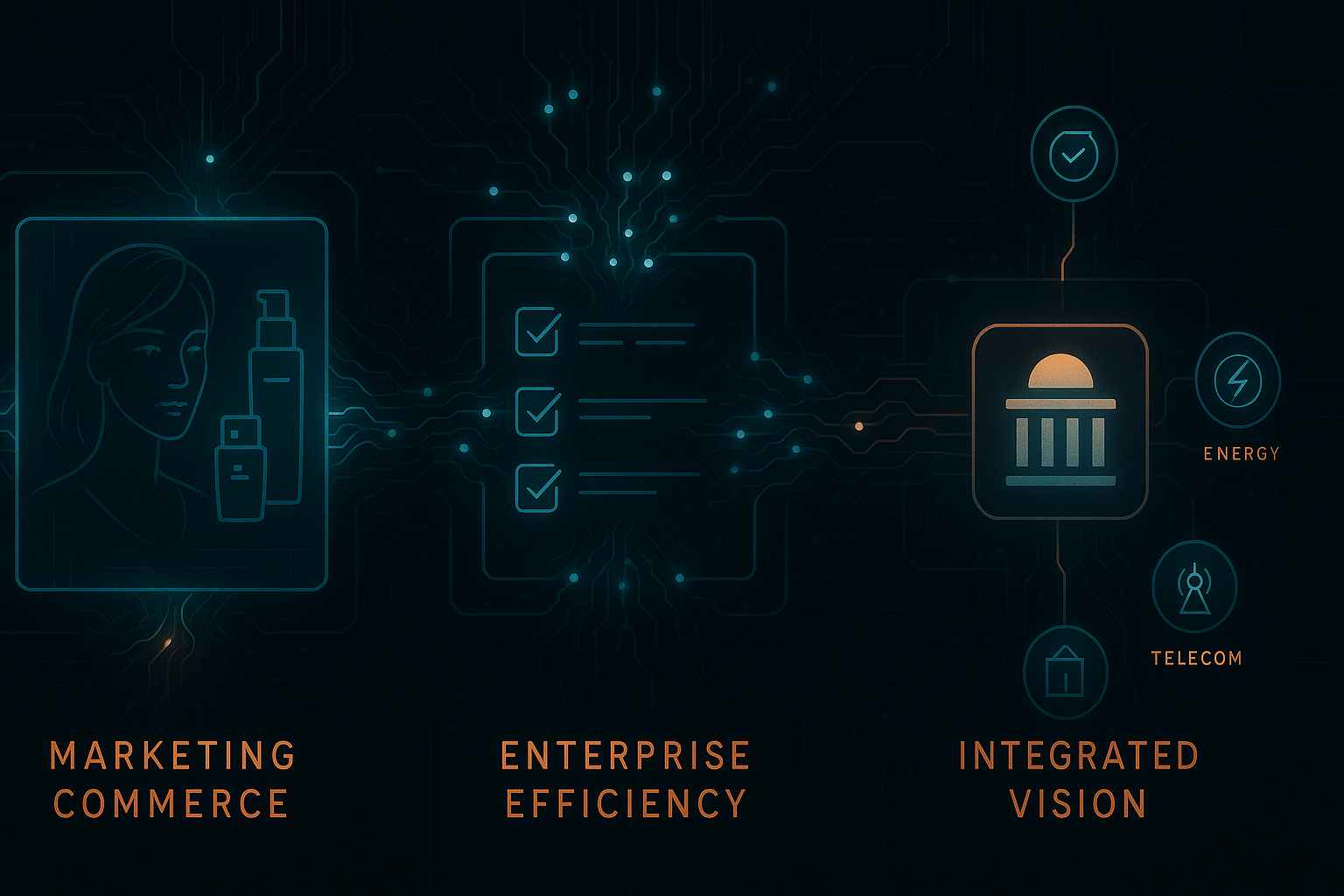
The AI industry has moved into a phase of intense integration. As of mid-June 2026, we are seeing global conglomerates embed generative AI into their core brand experiences, while large-scale enterprises prioritize operational efficiency to clear long-standing work backlogs.
Here’s the breakdown of what really matters today.
- L’Oréal’s Generative Leap with OpenAI In a major move for the marketing sector, L’Oréal has announced a strategic partnership with OpenAI to integrate generative AI across its content and product discovery platforms. This includes Maybelline developing a virtual "try-on" app integrated directly into ChatGPT, allowing users to experience products conversationally.
Why it matters: This signals a shift from "AI for content generation" to "AI for customer experience and commerce." Major brands are no longer just using AI to write emails; they are embedding it into the point of sale, using conversational agents to drive discovery and personalized interaction at scale.
- Banking on Efficiency: Deutsche Bank’s AI Backlog StrategyDeutsche Bank executives reported today that AI tools are now actively clearing work queues and accelerating project timelines across their global operations. By automating repetitive administrative and data-processing tasks, the bank is successfully reducing the "work backlog" that historically constrained human team productivity.
Why it matters: For large, legacy-heavy institutions, the immediate ROI of AI isn't necessarily creating "new products"—it’s about recovering thousands of lost hours by automating the bureaucratic friction that slows down global operations. It’s a perfect example of AI serving as an "efficiency multiplier" for the enterprise.
- Reliance Industries: A Decade of Visionary AI Integration At the 49th Reliance Industries AGM today, Chairman Mukesh Ambani reaffirmed AI’s place at the core of the conglomerate's future. From Jio’s initial mobile internet democratization to today's heavy investment in sovereign AI infrastructure, Reliance is positioning its diverse business units—from retail to energy—to be AI-first, leveraging deep data integration to gain a competitive edge.
Why it matters: Reliance's strategy highlights the importance of "data moats." By owning the infrastructure (connectivity), the commerce (retail), and the energy sectors, they are building an integrated environment where AI can be applied across the entire value chain, rather than in isolated silos.
Resources for Further Learning: Digiday: L’Oréal accelerates generative AI content engine with fresh OpenAI deal Business Standard: AI accelerating projects, clearing work backlogs: Deutsche Bank executive Business Today: RIL AGM 2026 – Reliance's Decade of AI Transformation
Author: Aadhya Deshmukh