26 June 2026
The AI Frontier: Mobile Networks, Autonomous Agents, and "AI Factories"
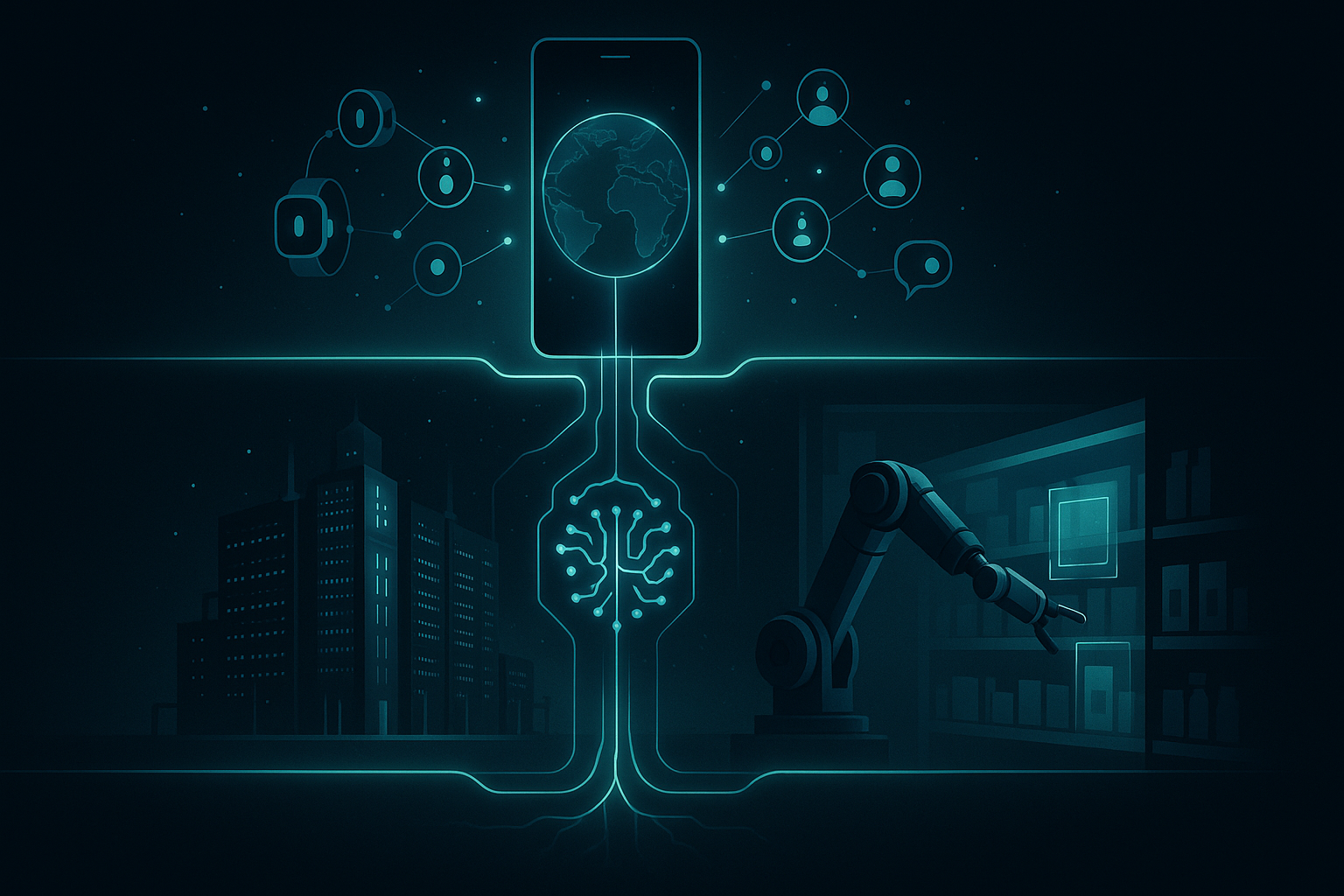
The AI landscape is accelerating at an unprecedented pace today. From massive hardware infrastructure buildouts to a fundamental shift in how global industries operate, we are no longer just talking about "chatbots." We are witnessing the industrialization of artificial intelligence as a core utility.
Here’s the breakdown of what really matters today.
- Huawei Unveils "GigaUplink" for Mobile AIDuring MWC Shanghai 2026, Huawei introduced its GigaUplink Solution. The industry has reached a consensus that current mobile networks must evolve from "downlink-centric" models to balanced uplink/downlink architectures to support the high-data demands of Mobile AI.
Why it matters: As smart wearables and embodied AI technologies become more prevalent, operators are focused on enhancing uplink capabilities, ensuring low latency, and fostering terminal-network-cloud synergy. This is a critical step in building the "Mobile AI" target network.
- Bitdeer AI Recognized as 2026 "AI Cloud Platform of the Year"Bitdeer AI has been named the "AI Cloud Platform of the Year" in the 2026 AI Breakthrough Awards. The company is being recognized for its vertically integrated "AI Factory" model, which eliminates third-party dependencies by owning and operating its own high-performance data center infrastructure.
Why it matters: As enterprises transition from localized experimentation to global production, traditional cloud architectures are struggling with fragmented workflows and capacity shortages. Bitdeer AI’s approach of managing the entire AI lifecycle—from distributed training to inference—within a singular environment is setting a new standard for infrastructure reliability.
- Striding AI Enters "Physical AI" RoboticsStriding AI has announced plans to develop next-generation robotic foundation systems designed for physical AI deployment. The company is building foundational technologies that allow robots to perceive, reason, and act in real-world environments, starting with structured settings like retail.
Why it matters: By integrating foundation models with robotic control systems and human-in-the-loop reinforcement learning, Striding AI is working to scale service robots for sectors like healthcare, logistics, and agriculture. Their internal testing has already shown a 3x improvement in task success rates.
Resources for Further LearningHuawei: GigaUplink Solution for Mobile AI Bitdeer AI: 2026 AI Cloud Platform AwardStriding AI: Physical AI Deployment Plans
Author:Sanjay Verma