25 June 2026
The AI Infrastructure Surge: Global Sovereignty, Agentic Reliability, and Enterprise Governance
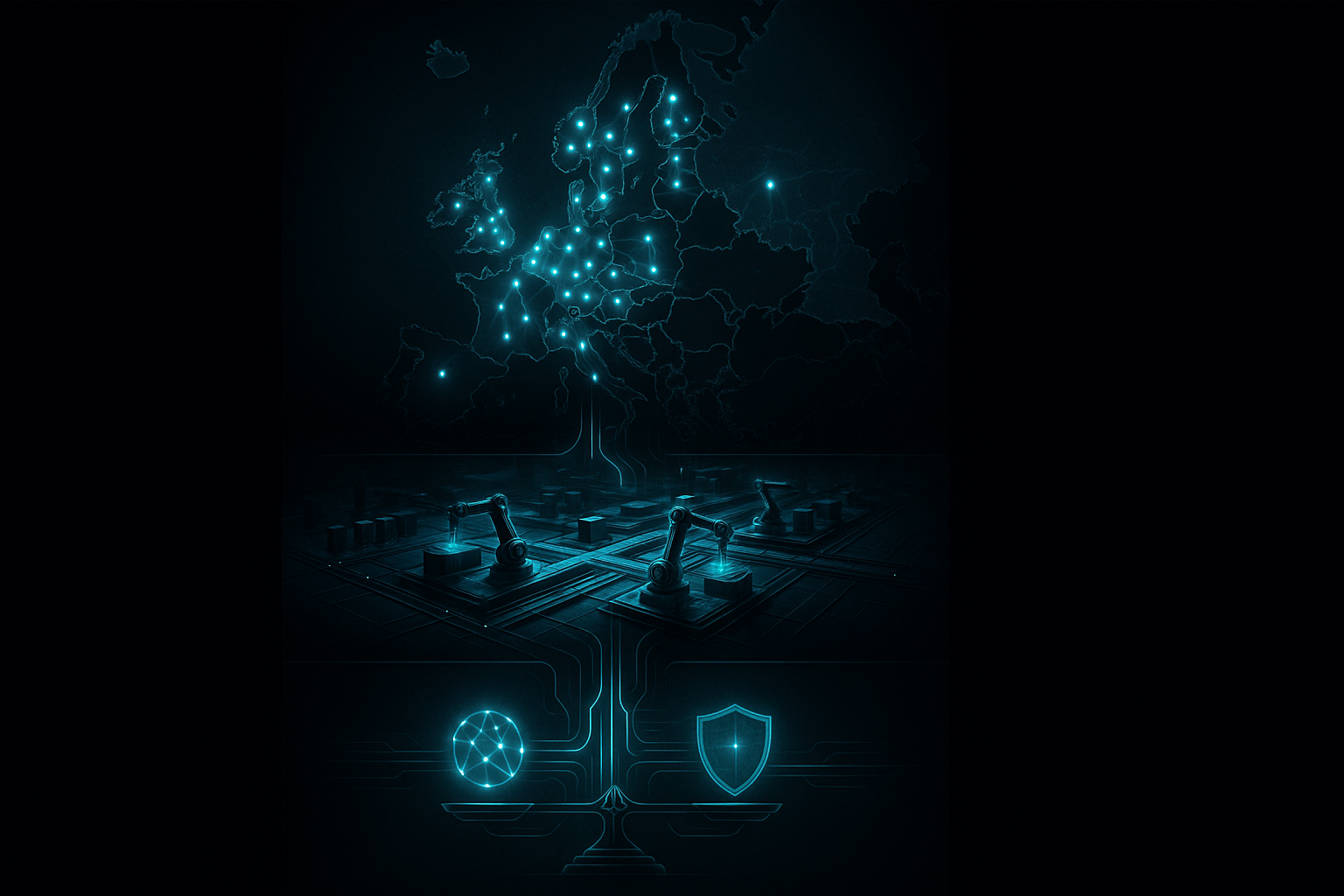
The AI industry is rapidly transitioning from the "experimental" phase into a "foundational utility" phase. As of June 25, 2026, the focus has shifted heavily toward building sovereign infrastructure, mastering the reliability of autonomous agents, and bridging the enterprise governance gap.
Here’s the breakdown of what really matters today.
- Europe’s "AI Factory" Expansion NVIDIA has announced a record-breaking development of 35 new AI-HPC supercomputers across 23 European countries. This deployment, totaling over 800 AI exaflops, is providing over 3 million researchers with the infrastructure needed for breakthroughs in climate science, healthcare, and clean-energy decarbonization.
Why it matters: This represents a massive shift toward Sovereign AI infrastructure. By building localized, high-performance "AI factories," European nations are reducing reliance on foreign cloud providers and ensuring that their fundamental scientific research is powered by domestic, state-of-the-art compute stacks.
- The Global Lighthouse: AI Rewires Manufacturing The World Economic Forum has released its latest cohort of the "Global Lighthouse Network," highlighting 16 sites where AI has moved from isolated pilots to a core operating capability. These sites are seeing massive gains: some have accelerated speed-to-market by 44% and reduced defects by nearly 50% by integrating real-time AI agents into their supply chains.
Why it matters: We are seeing the death of the "AI pilot" era. Successful industrial leaders are no longer "experimenting" with AI; they are embedding it into the structural fundamentals of their businesses, emphasizing the necessity of human-machine collaboration.
- The "Agentic" Enterprise: A Decline in CTO Confidence New research from Akkodis reveals a striking trend: while AI adoption is accelerating, CTO confidence in scaling AI has fallen to 48%, down from 82% two years ago. The primary barrier is no longer access to technology, but the sheer complexity of integrating "Agentic AI"—systems that don't just support work, but actively plan, decide, and execute tasks—into existing enterprise systems.
Why it matters: Agentic AI is the defining trend of 2026, cited by 40% of CTOs as the most impactful technology. However, the gap between ambition and execution is now a "governance gap"—and it’s the biggest challenge for engineering leadership this year.
Resources for Further Learning: NVIDIA Newsroom: Europe Unveils 35 New AI Supercomputers WEF: New Global Lighthouse Sites Rewiring Manufacturing Akkodis Report: CTO Confidence in Scaling Agentic AI
Author:Aniket Deshpande