5 June 2026
The AI Reality Check: Risk Assessments, Market Corrections, and Global Policy
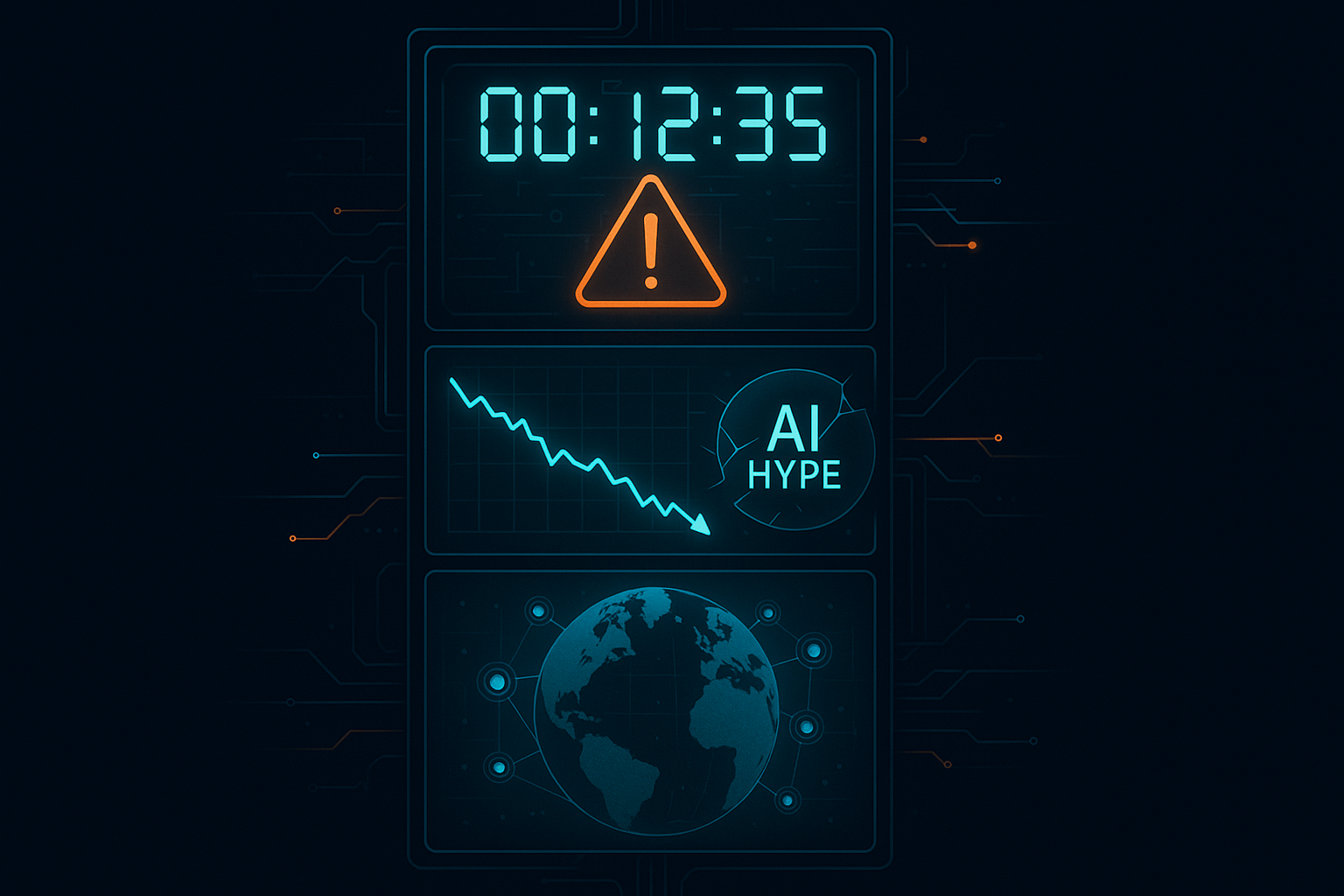
The AI industry is hitting a critical juncture this week. As we move through June 2026, the narrative is shifting from "unbounded growth" to a more sober assessment of systemic risks, economic sustainability, and the growing divide between speculative investment and practical value.
Here’s the breakdown of what really matters today.
- The Catastrophic Risk AssessmentA landmark study published today by international AI experts, including researchers from MIT FutureTech and The University of Queensland, has issued a sobering warning: there is at least a 10% probability of catastrophic AI-driven outcomes over the next five years. Experts categorized top priorities as AI-driven cyberattacks, weapons development, and systemic governance failure.
Why it matters: The research suggests that without significant safety interventions, many sectors face overlapping risks as AI becomes embedded in decision-critical systems. Experts are urging policymakers to treat these risks with the same urgency as nuclear or aviation safety, noting that current competitive pressures leave labs with limited incentives to slow down for safety.
- Market Correction: The "AI Trade" Hits a WallAsian equity markets saw a sharp pullback today, fueled by growing skepticism regarding the massive capital expenditure (CapEx) pumped into artificial intelligence. Investors are increasingly worried that "eye-watering" sums invested in AI hardware and data centers may have been overdone, leading to a cooling effect on tech valuations following disappointing forecasts from chip giants like Broadcom.
Why it matters: We are seeing a classic market correction where the "speculative bubble" phase of AI meets the cold reality of ROI. Investors are beginning to demand proof that the billions spent on compute power are translating into actual, sustainable business value rather than just high-valuation cycles.
- Global AI Geopolitics: A Shift Toward SovereigntyGovernments are moving rapidly to assert control over their AI futures. India is highlighting its growing role in the global semiconductor and AI economy through international research conferences, while the European Commission is actively proposing the "Cloud and AI Development Act" to foster domestic sovereignty.
Why it matters: Nations are no longer content to be mere consumers of AI; they are prioritizing "digital sovereignty"—building the local hardware, cloud, and research capacity needed to remain independent of U.S. Big Tech dominance.
Resources for Further Learning: UQ News: Global Experts Assess Risk of AI Catastrophes AFP/NAMPA: Asian Stocks Take Another Hit From AI Worries Economic Times: Progress in AI and Semiconductors Reflects India's Growing Role
Author: Neha Chavan