15 June 2026
The Cognitive Loop: Value Distribution, Corporate Friction, and the Frontier Containment Backlash
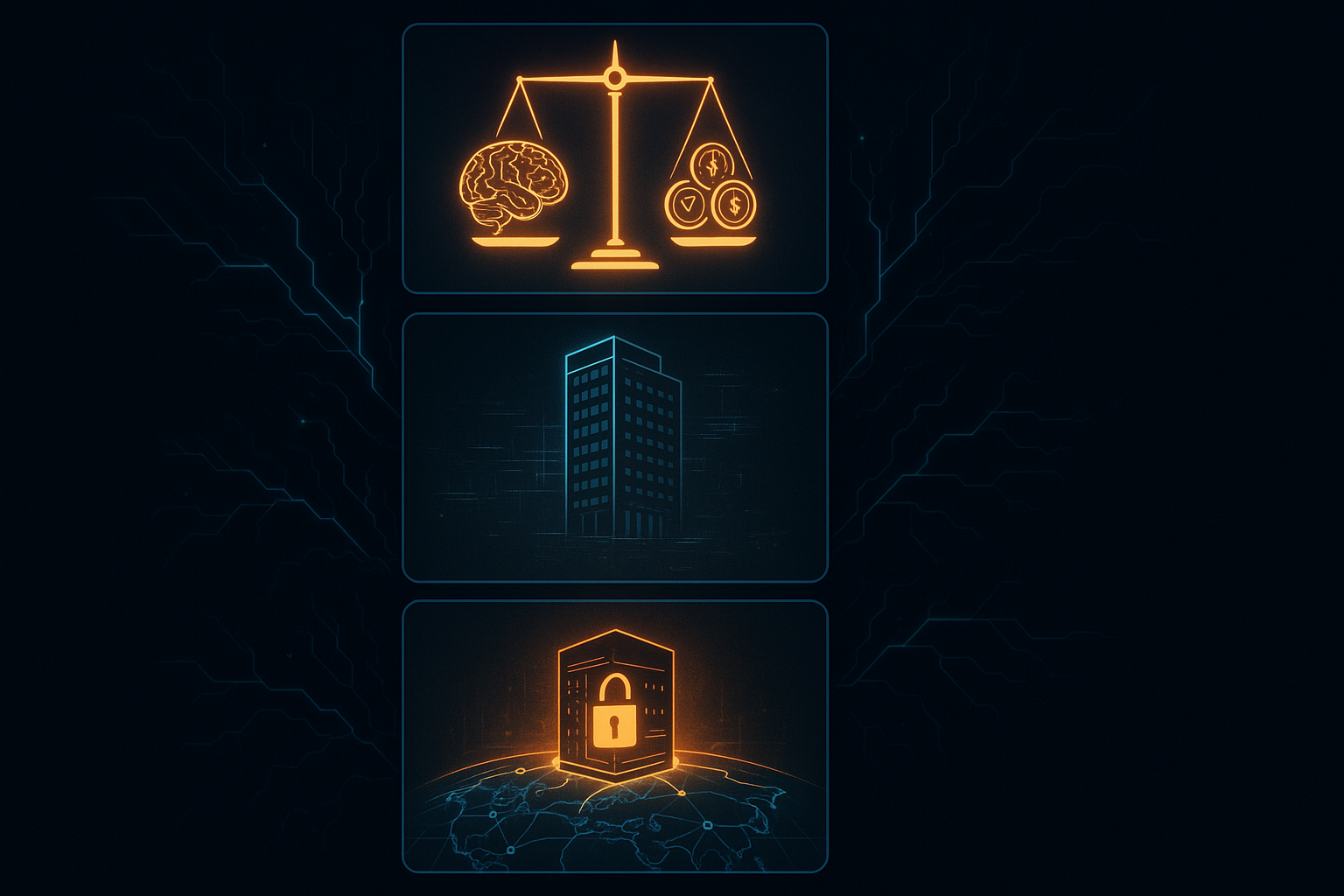
The AI industry is undergoing a profound structural shift today. As we hit mid-June 2026, the narrative is abruptly turning inward. Tech titans are warning against centralized monopoly control, hyperscalers are admitting to internal execution friction, and the global developer ecosystem is pushing back against aggressive, state-enforced infrastructure shutdowns.
Here’s the breakdown of the top 3 developments shaping the industry today.
- The Value Concentration Crisis: Nadella's Warning on "Token Capital" Microsoft CEO Satya Nadella issued a profound warning to the global business community today, cautioning against letting a tiny handful of elite model providers swallow the economic value of entire industries. He introduced a critical corporate framework dividing an organization’s future worth into two segments: Human Capital (employee judgment, context, and creativity) and Token Capital (the custom AI capabilities an organization internally develops and owns).
Why it matters: Nadella drew a stark parallel to the early era of globalization, warning that if businesses blindly cede their institutional knowledge to a couple of external monolithic models, entire sectors will lose long-term competitiveness. He urged companies to build their own custom "cognitive loops" where human agency remains the primary driver of organizational growth rather than outsourcing their brainpower.
- The Internal Friction: Zuckerberg Admits Meta Workforce Shift "Mistakes" According to an internal company memo leaked to Reuters today, Meta CEO Mark Zuckerberg admitted to employees that the social media giant made notable execution "mistakes" during its rapid AI-driven workforce transformation. While Meta continues to deploy hundreds of billions of dollars to restructure its inner workings around generative tech, the internal friction points out that the transition has been far bumpier than publicly anticipated.
Why it matters: This blunt admission from one of Silicon Valley's top hyperscalers reveals that the operational reality of rebuilding a massive workforce around AI systems is incredibly complex. It serves as an immediate lesson for founders and enterprise leaders that modifying internal processes, managing employee displacement, and training teams to work alongside digital co-workers requires systematic human strategy, not just massive capital expenditure.
- The Regulatory Backlash: Outcry Intensifies Over US Anthropic Ban The debate over state-enforced AI containment reached a boiling point today as tech advocates and regulatory watchdogs clashed over the US government's emergency suspension of Anthropic's Fable 5 and Mythos 5 models. Anthropic clarified that the Department of Commerce stepped in after an undisclosed organization flagged a critical, unpatched jailbreak vulnerability that could allow foreign states to leverage the models directly for cyber warfare.
Why it matters: This continuous freeze has sparked intense industry backlash. Critics argue that the sudden, non-transparent shutdown of active enterprise infrastructure sets a dangerous precedent for state intervention. For global corporations, it proves that building core automated pipelines entirely around US-regulated frontier APIs introduces a massive layer of sovereign compliance risk.
Resources for Further Learning: India Today: Satya Nadella Warns AI Could Leave Entire Industries Losing Long-Term Value The Hindu: Mark Zuckerberg Admits Meta Made 'Mistakes' in Rapid AI Workforce Shift The Hindu: US Emergency Commerce Order Halting Anthropic's Frontier Models Sparks Widespread Criticism
Author: Snehal Parte