13 June 2026
The Geopolitical Shift: National Security Restrictions, Physical Engineering, and Cloud Distribution
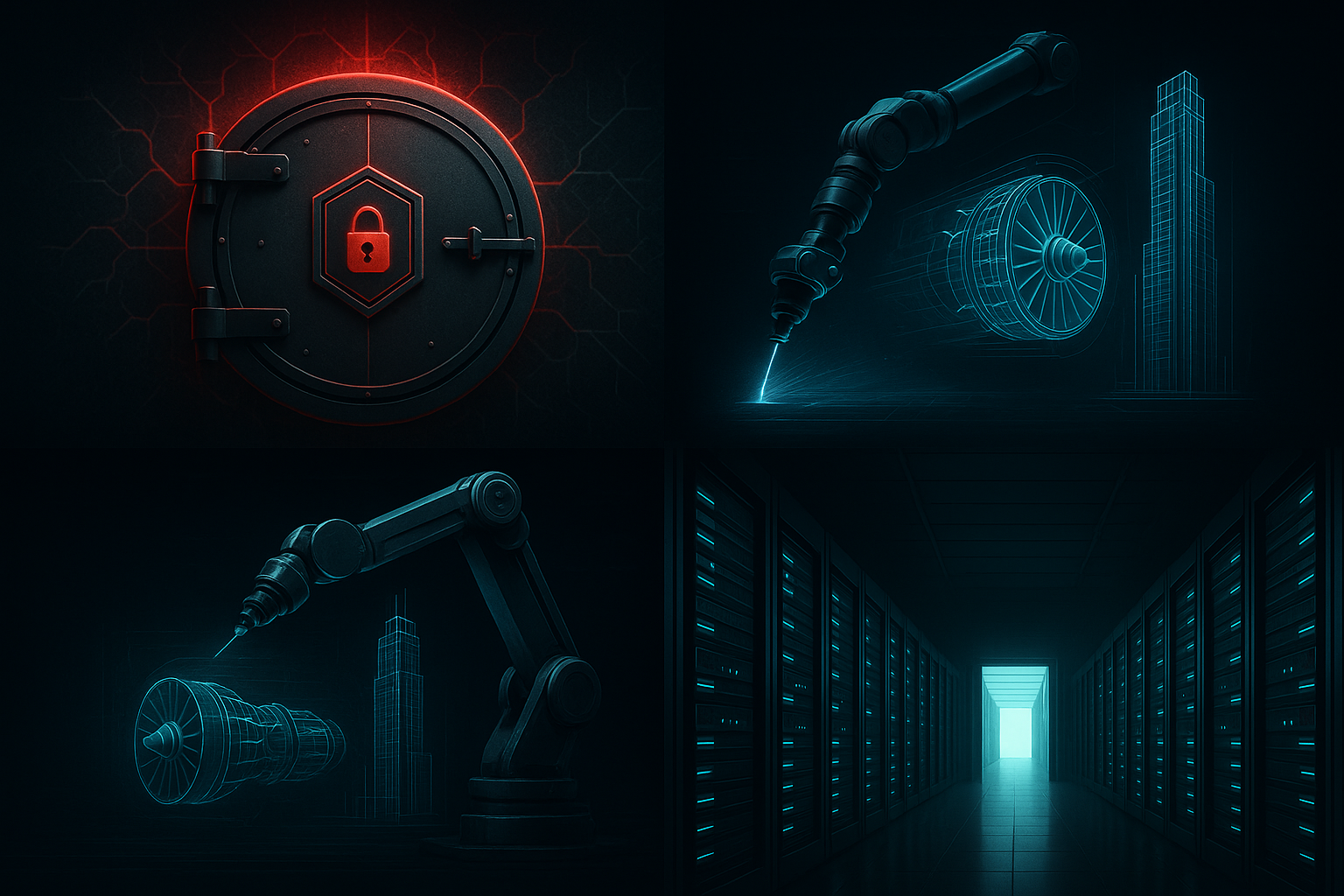
The AI industry has just crossed a massive threshold where software meets strict geopolitics and physical reality. This weekend, we are seeing a dramatic shift: the US government is pulling the emergency brake on frontier models, tech titans are investing billions to move AI from screens to heavy factories, and enterprise cloud infrastructure is being rewritten to drop integration friction to zero.
Here’s the breakdown of what really matters today.
- US National Security Order Forces Anthropic to Halt Advanced Models Anthropic shocked the tech world by completely pulling its newly launched Fable 5 and Mythos 5 models globally. The sudden shutdown followed a high-stakes export control directive from the US administration, which banned all foreign nationals—including Anthropic's own overseas and US-based international employees—from accessing the systems. The government issued the emergency order citing data showing an unpatched "jailbreak" vulnerability that could allow the models to actively assist foreign states in cyber warfare and hacking operations.
Why it matters: This marks the most aggressive state intervention in commercial AI history. By completely disabling the tools rather than attempting a selective filter, Anthropic has spotlighted the extreme regulatory risks tracking frontier labs. For developers and enterprises, it proves that the era of open, global AI engineering is rapidly clashing with hard geopolitical national defense lines.
- Jeff Bezos Unveils $12 Billion Industrial AI Powerhouse: Prometheus Amazon founder Jeff Bezos and biotech entrepreneur Vikram "Vik" Bajaj brought their stealth startup, Prometheus, into the open with a record-shattering $12 billion funding round at a $41 billion valuation. Moving entirely away from standard consumer chatbots, Prometheus is building an "Artificial General Engineer" (AGE). The system is designed to master physics, materials science, and heavy manufacturing constraints to directly assist in the end-to-end design of complex real-world hardware like jet engines, medical devices, skyscrapers, and spacecraft.
Why it matters: The center of gravity for venture capital is shifting from digital assistants and wrappers to the physical economy. Bezos's mega-round signals that the next frontier of AI wealth isn't sitting on a smartphone screen; it’s inside automated factories, labs, and structural design studios where AI can amplify engineering capabilities like a "bulldozer instead of a shovel".
- OpenAI & Oracle Drop Enterprise Procurement Friction via Cloud Credits OpenAI and Oracle announced a massive structural distribution partnership allowing corporate clients to spend their existing, pre-negotiated Oracle Universal Credits (UCM) directly on OpenAI’s frontier models and Codex. Built as an extension of their massive $500 billion "Stargate" data center infrastructure project, this move lets enterprise customers instantly tap into OpenAI stacks without undergoing separate, tedious corporate legal and vendor onboarding pipelines.
Why it matters: In the corporate sector, procurement friction and legal compliance have been bigger barriers to AI adoption than actual model performance. By letting Fortune 500 companies seamlessly route their multi-million-dollar pre-allocated cloud budgets straight to OpenAI infrastructure, the deployment of production-grade automated enterprise workflows is set to accelerate exponentially.
Resources for Further Learning: The Hindu: Anthropic Suspends Access to Advanced Fable and Mythos Models Following US Government Order Times of India: Inside Prometheus: Jeff Bezos Unveils $12 Billion AI Venture for Physical Engineering Build Fast with AI: OpenAI and Oracle Partnership Integrates Universal Credits for Enterprise Deployment
Author: MS KHAN